Sponsored by

TOGETHER WITH TODAY'S PARTNER
Build. Break. Fix. Learn.

KodeKloud gives you 1,280+ hands-on labs where you provision Kubernetes clusters, write Terraform configs, build CI/CD pipelines, configure Linux systems, containerize apps with Docker, automate with Ansible, and manage Git workflows.
78+ playgrounds let you experiment freely in sandbox AWS environments, Kubernetes clusters, and CI/CD systems without risk.
190+ courses across DevOps, Cloud, and AI pair theory with hands-on labs at every step.
KodeKloud Engineer and 100 Day Challenges provide real-world job scenarios with automated grading that confirms your solutions work.
Stuck? The 55,000+ member Discord community connects you with peers and instructors ready to help.
Every lab runs in a live environment. You deploy, you troubleshoot, you learn. No videos without context. No simulations. The kind of practice that actually builds confidence because you've done real work, not watched someone else do it.

Good morning, {{first_name|there}}. A chip startup with nothing shipping until 2027 went from $1B to $6.5B in three months — because Anthropic signed a purchase order.
Read time: 3 minutes. Same time, every weekday — rate today's issue at the bottom.
🚀 The Big Story: $250M turned a $1B chip startup into $6.5B
Bloomberg reported Wednesday that UK inference-chip startup Fractile is in talks for roughly $600M at a $6.5B pre-money valuation — four months after raising $220M at about $1B, and off the back of a single Anthropic commitment.
Nothing shipped in between: Anthropic's ~$250M buys priority access to silicon not expected until 2027. It's an offtake commitment, not a supply line.
The performance claims are simulated: Fractile says its memory-compute design runs LLMs up to 100x faster at up to 90% lower cost, with 99.99% of inference operations executing in on-chip SRAM. None of it verified in production.
Groq went the other way the same week: $350M at $3.5B — half its September 2025 price. Same sector, opposite direction, seven days apart.
The round hasn't closed: both companies declined to comment, and terms could still change. Founder Walter Goodwin started the company in 2022 out of Oxford.
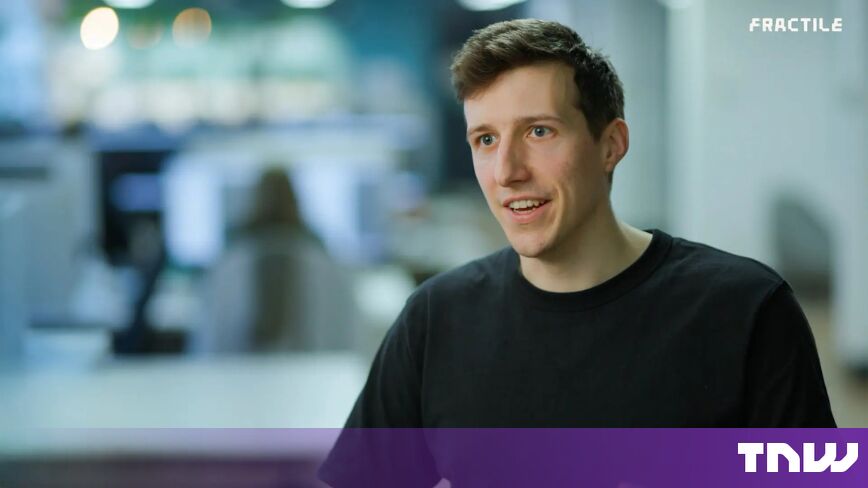
Jason's take: What got repriced here isn't a chip — it's a signature. Fractile's silicon and Groq's silicon are both mostly promises right now; the difference is that one has a frontier lab's name on a purchase order. That means the moat in AI hardware today is distribution, not physics. So if you're budgeting inference: stop waiting for prices to fall because a better chip exists. They'll fall where a lab has pre-committed capacity, and nowhere else — and not before 2027.
⚡ Quick Hits
Google took a $12.2B warrant on Marvell. Rights to nearly 59M shares at $206.58 each through 2033, as part of an expanded custom-chip deal. Marvell jumped 8%.
Samsung raised foundry prices up to 15%. Its 4nm lines are full and TSMC has no room — Chinese customers are absorbing the steepest hikes. Compute gets more expensive before it gets cheaper.
A third of the post-ChatGPT web shows AI authorship. Pew put it at 35% of pages published since launch. If you publish, "a human wrote it" is no longer a differentiator anyone can see.
Google shipped a Preferred Sources button. Readers can now pin publishers into Search and Google News results. It's a free distribution lever — you just have to ask for it.
Ramp launched Router. Model routing across OpenAI, Anthropic, DeepSeek, and xAI — days after Stripe paid over $7B for OpenRouter. The routing layer just became contested territory.
Data centers became a midterm issue. New York imposed the first statewide hyperscale moratorium and Wyoming's Chuck Gray won a primary on "stop data centers." Your compute now has a politics problem.
📡 Trending on X
"$6.5B for a simulation." The Fractile round split the timeline between "this is how frontier hardware gets funded" and "this is 2021 with better slides."
Groq and Fractile keep getting posted side by side. Same week, same sector — one halved, one 6x'd. The only visible difference is whose logo is on the contract.
Pew's 35% is the week's Rorschach test. Half the timeline reads it as slop flooding the web; the other half points out the study flags signs of AI assistance, not slop.
Data-center opposition went bipartisan. Ohio, Texas, Wisconsin, Michigan — and the argument now is whether the industry's ratepayer pledge is a fix or a shield.
📺 Trending on YouTube
🛠 The Workflow: Cut your model bill before compute gets pricier
Samsung just raised prices and the cheap inference chips don't land until 2027. Which model answers which request is the only lever you control this quarter.
Pull one week of model spend by endpoint. Almost every stack has a single call path eating 60%+ of the bill. Find it before you optimize anything else.
Sort your calls into three tiers. Cheap-and-fine (classification, extraction, formatting), needs-reasoning (analysis, code, planning), and customer-facing (never degrade). Tier one is usually the majority.
Move tier one to a small model. Point extraction and classification at a flash or mini tier — then run both models on 50 real requests and diff the outputs before you commit.
Put a router in front of the rest. OpenRouter, Ramp's new Router, or your own switch. The point is one place to change model choice without a redeploy.
Set a spend alarm, not a spend cap. A cap breaks production at the worst moment. An alarm at 1.3x your weekly baseline tells you a prompt regressed.
Reply with the word "ROUTER" and I'll send you the three-tier classification sheet plus the diff script I use.
🧰 Trending Tools
Ramp Router — one endpoint that routes across OpenAI, Anthropic, DeepSeek, and xAI. For teams whose model bill has become a real line item.
ElevenLabs Eleven v3 — 70+ languages with fine-grained voice controls. For creators who want one script to ship in eight markets.
Murf Falcon 2 — text-to-speech at $0.01 per minute. For volume narration where the old per-minute price killed the margin.
Perplexity Brain — a self-improving knowledge wiki feeding its Computer agent. For operators tired of re-explaining the same context every session.
Google Preferred Sources — get readers to pin your publication into Search and News. For anyone whose traffic got eaten by AI Overviews.
Creators lock in holiday calendars 90 days out. Structure commissions, recruit creators, and optimize your creator affiliate strategy before the rush with Levanta's 90-Day Holiday Sprint. Get the Free Guide.
📣 Put your brand here. The AI Innovator reaches AI-first operators, creators, and marketers every weekday. Primary sponsorships are now booking.
That's a wrap
Monday: what Pew's 35% figure actually means for anyone who publishes for a living — and the three signals readers still use to tell.
Enjoying the new format? Share your link — every referral keeps this free:
How was today’s email?
You're reading the 3-minute AI Innovator — same time, every weekday. Hit reply and tell me what you want more of. I read every one.

